News


EECL Ultra-Low-Noise Amplifiers achieve in-orbit technical milestone on ESA HydroGNSS climate mission


EECL hardware enables precise climate data capture from Earth observation satellites launched on Transporter-15


11th March 2026


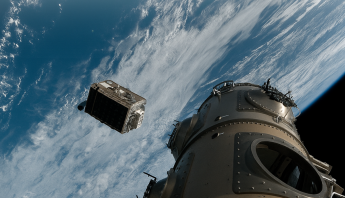
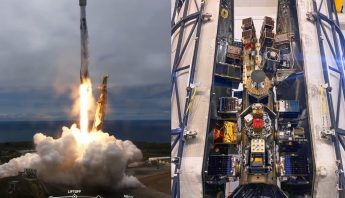
European Engineering Consultancy Ltd (EECL), a precision engineering specialist in bespoke RF and microwave subsystems for space and industry, is marking a technical milestone with the successful operation of its ultra-low-noise amplifiers on the ESA HydroGNSS climate mission, now operating in Low Earth Orbit following its launch from Vandenberg Space Force Base, California, in November 2025. The achievement comes three years after the company signed its initial contract with Surrey Satellite Technology Ltd (SSTL), which built the satellites and the GNSS receiver for the mission.


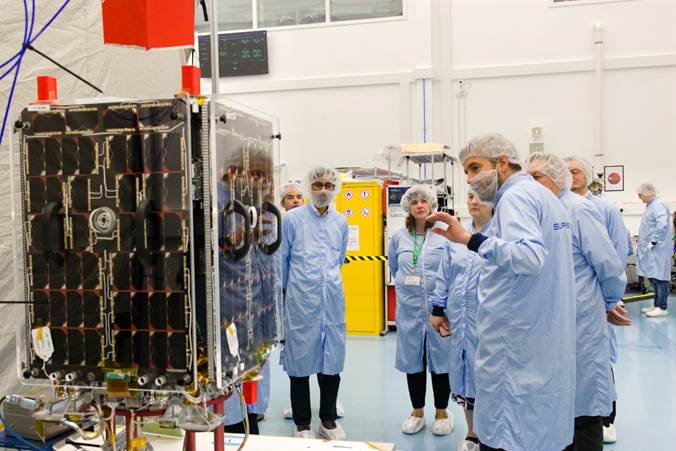
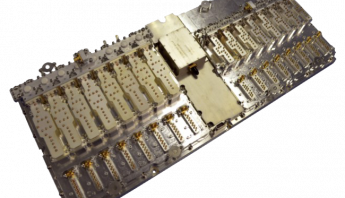
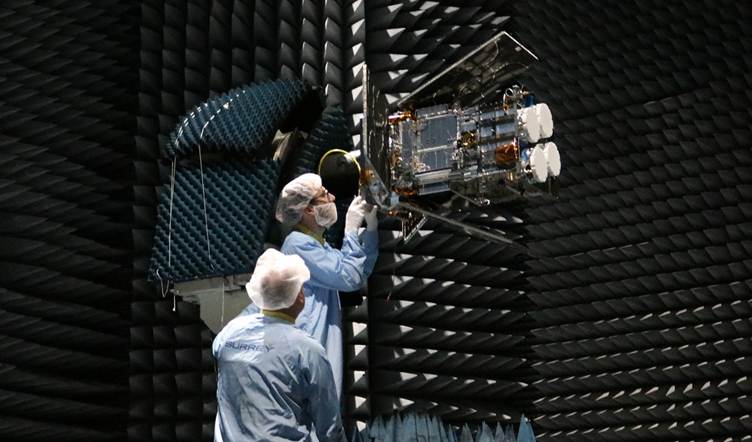
Under the ESA programme, EECL was selected to design and manufacture six multiband ultra-low-noise microwave amplifiers (LNAs) for the twin HydroGNSS Scout satellites. These LNAs form a critical part of the payload’s radio frequency chain, amplifying extremely weak reflected signals while preserving signal integrity, to ensure valuable scientific data is captured at the earliest stage of reception.


For EECL, the strong in-orbit performance marks a major validation of its engineering capability. The LNAs were designed, manufactured and rigorously tested in the UK to meet demanding space qualification standards. Their operational success reinforces the company’s expertise in high-reliability microwave technology for space applications.

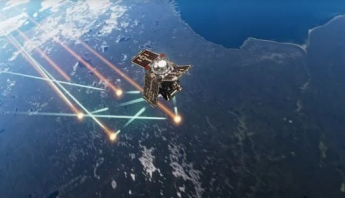
The HydroGNSS mission, supported by EECL’s LNAs, is ESA’s first Earth Observation Scout mission to reach orbit. The twin satellites use a pioneering GNSS reflectometry technique to capture and analyse faint signals from Global Navigation Satellites, including GPS and Galileo, after they reflect from land, ocean and ice on the Earth’s surface. These measurements enable scientists to monitor key hydrological and climate variables such as soil moisture, freeze–thaw state over permafrost, inundation and wetlands, as well as above-ground biomass. The captured data is crucial to understanding and responding to climate change.


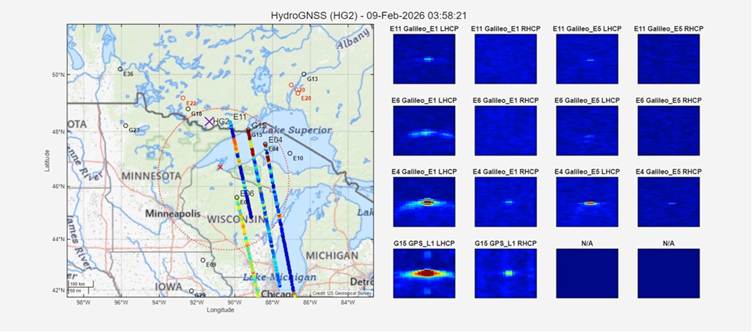
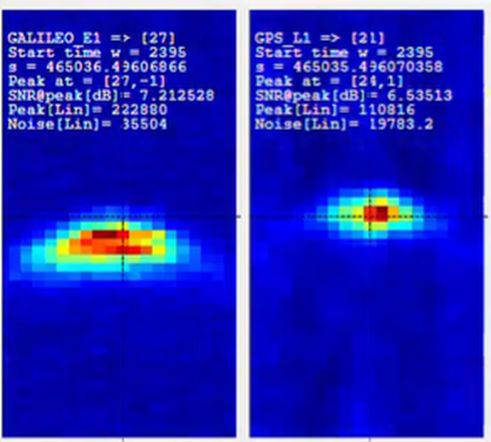
Early in-orbit results have confirmed that the spacecraft payloads are performing as designed, with both satellites successfully collecting Delay Doppler Maps of reflected GNSS signals. Commissioning has progressed smoothly, with subsystems brought online and payload data acquisition initiated on schedule, validating hardware functionality and demonstrating strong signal acquisition capability.


“HydroGNSS is a mission with real global significance,” explains Ben Kieniewicz, CEO of EECL. “The signals being measured are incredibly faint, so low-noise amplifier performance is fundamental to mission success. Seeing our hardware performing accurately in orbit and enabling the collection of meaningful climate data is something the whole EECL team is extremely proud of.”


Since the original agreement between EECL and SSTL was signed in 2022, HydroGNSS has begun delivering meaningful climate data from orbit, demonstrating how high-performance RF technology underpins modern Earth observation systems. EECL’s involvement in the mission reflects its continued commitment to supporting space programmes that address global environmental challenges, while reinforcing its position as a trusted supplier of reliable, ultra-low-noise microwave solutions for demanding earth observation and SatCom applications.

 

EECL secures £1.5m contract with European Space Agency for payload qualification and test systems


4th February 2026


EECL secures £1.5m contract with European Space Agency for payload qualification and test systems


European Engineering Consultancy Ltd (EECL) has been awarded a £1.5 million contract by the European Space Agency (ESA) to deliver ground support equipment and environmental and space-qualification testing for a next-generation digital satellite payload.

Thanks to a strategic introduction by Space South Central, EECL will provide end-to-end qualification services, including thermal-vacuum cycling, vibration and mechanical testing, EMC assessment, and comprehensive payload validation. The company will also design and supply automated ground support equipment and test systems to streamline qualification and integration processes.

The new payload introduces a more complex and software-defined digital processing system, positioning EECL’s automation-driven approach as a critical component in achieving rapid and repeatable test cycles. EECL’s hardware and software test infrastructure has been engineered to support high-throughput constellations, enabling reduced validation timelines and improved operational efficiency for integrators.

Dr Ben Kieniewicz, Founder and CEO of EECL, said: “We’re extremely proud to be selected for this programme. These contracts are a reflection of our technical experience and capabilities in the field of space engineering. The contracts allow significant growth for EECL and facilitate the expansion of our team and scaling of our manufacturing operations to meet increasing demand. “The project also gives our graduate engineers the opportunity to participate in ESA reviews and mission-critical hardware development, strengthening early-career talent within the Space South Central region.”


Antonia Yendell, Head of Space Ecosystem Development at the UK Space Agency, added: “Congratulations to EECL on securing this important contract with  ESA. This partnership is one of many that demonstrates the powerful role space clusters play within the UK’s vibrant and connected space ecosystem; fostering innovation, strengthening the UK’s space supply chains, and driving economic growth.”


Louise Butt, Director of Space South Central, said:The award of these contracts demonstrates the tangible impact of strategic collaboration. Our International Partnership Manager played a key role in connecting EECL, a trusted regional leader in RF design and space‑flight hardware, with international programmes. By brokering this relationship, we’ve secured inward investment and strengthened the regional supply chain, creating opportunities for growth and collaboration that benefit the entire UK space sector.

“This partnership reinforces our region’s capability to deliver complex satellite communications and underscores the value of collaborations that drive national competitiveness in the global space economy.”

Our latest news

Saelig Electronics Appointed as Authorized Distributor in USA for EECL’s RF Solutions


May 2026

EECL invests in RF production, test and cleanroom facilities to include on-demand lab hire

April 2026

EECL Ultra-Low-Noise Amplifiers achieve in-orbit technical milestone on ESA HydroGNSS climate mission

March 2026

EECL secures £1.5m contract with European Space Agency for payload qualification and test systems

February 2026

EECL Strengthens Technical Leadership with Appointment of Principal Engineer


February 2026

EECL Receives ISO9001 Accreditation


January 2026

EECLs XBand LNB in Space

EECLs hardware launches on SpaceX and has validated in orbit performance

January 2026

We’re Finalists – Elektra Awards 2025

EECL were finalists in Elektra awards 2025 for design team of the year   November 2025

EECL Showcases RF & Microwave Test Innovations at IMS 2025


June 2025

EECL Presents W-Band Frequency Converter at ARMMS RF & Microwave Conference

Our first 90GHz product presented

May 2025

Kingston Borough Business Awards 2025 – Winners!​

We won Growing Reputation Award with a distition in Technology Impact   April 2025

EECL Delivers Flight Hardware to SSTL for Amazon Monitoring

We delivered 3 flight modules for amazon rainforest monitoring due to launch on Amazonia-1B. 

March 2025

ESA HydroGNSS Delivery to SSTL

We delivered 9 payload modules for ESA HydroGNSS mission all designed, built and tested by EECL

January 2024

EECL Delivers 10,000th RF FIP Enclosure

marking a milestone in its production capability

December 2023

EECL Selected to Supply ESA-SSTL LNA Modules

We were selected to design 9 flight modules for SSTL on ESA HydroGNSS

December 2023

First Hardware in Space is performing

Our first hardware was launched on SpaceX – A GPS receiver for SpacePNT

June 2023

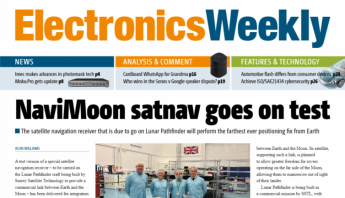
EECL Featured on the Front Cover of Electronics Weekly

Our lunar receiver was featured on the front page of Electronics Weekly

May 2022

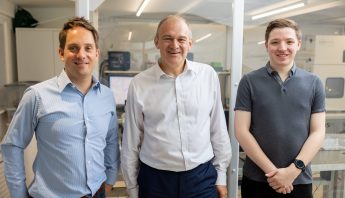
EECL Hosts Sir Ed Davey

We had the pleasure of hosting our MP Sir Ed Davey who enjoyed a tour of our projects and facilities

April 2022

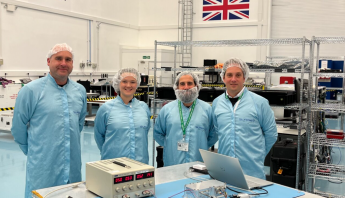
EECL Delivers EM Moon GNSS Hardware to ESA and SSTL

We delivered the Engineering Model to ESA for the Lunar GPS Mission

April 2022

Send us a message and we will get back to you quickly