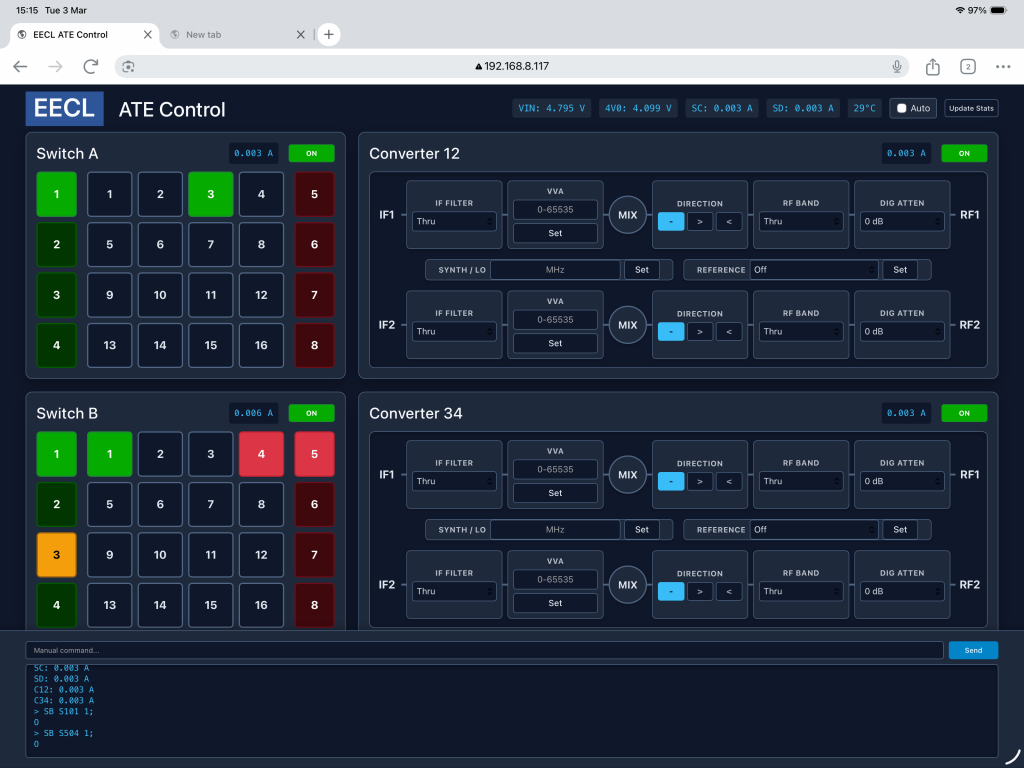
Each unit contains an integrated web server, allowing direct access via Ethernet or USB. By simply entering the device’s IP address into a standard web browser, users can launch an intuitive web-based GUI that provides full system control and real-time command visibility using SCPI-style communication.
An example of the interface is shown below.
In addition to the browser-based control, the unit can be easily integrated into your own software environment via Ethernet or USB (Virtual COM Port), enabling straightforward remote operation and automation.
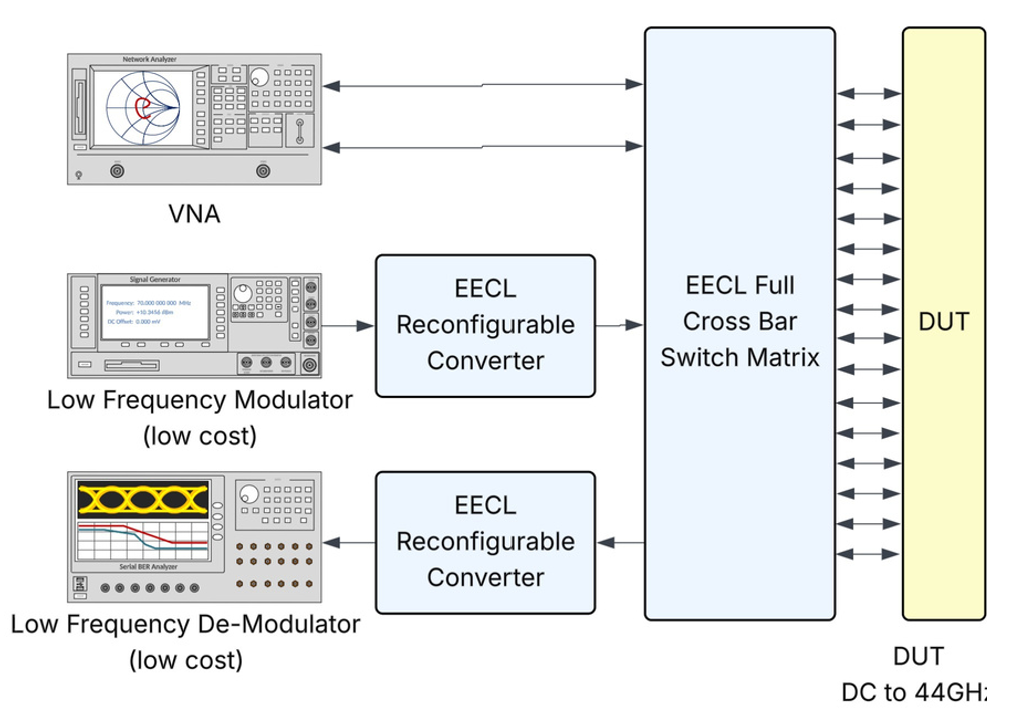
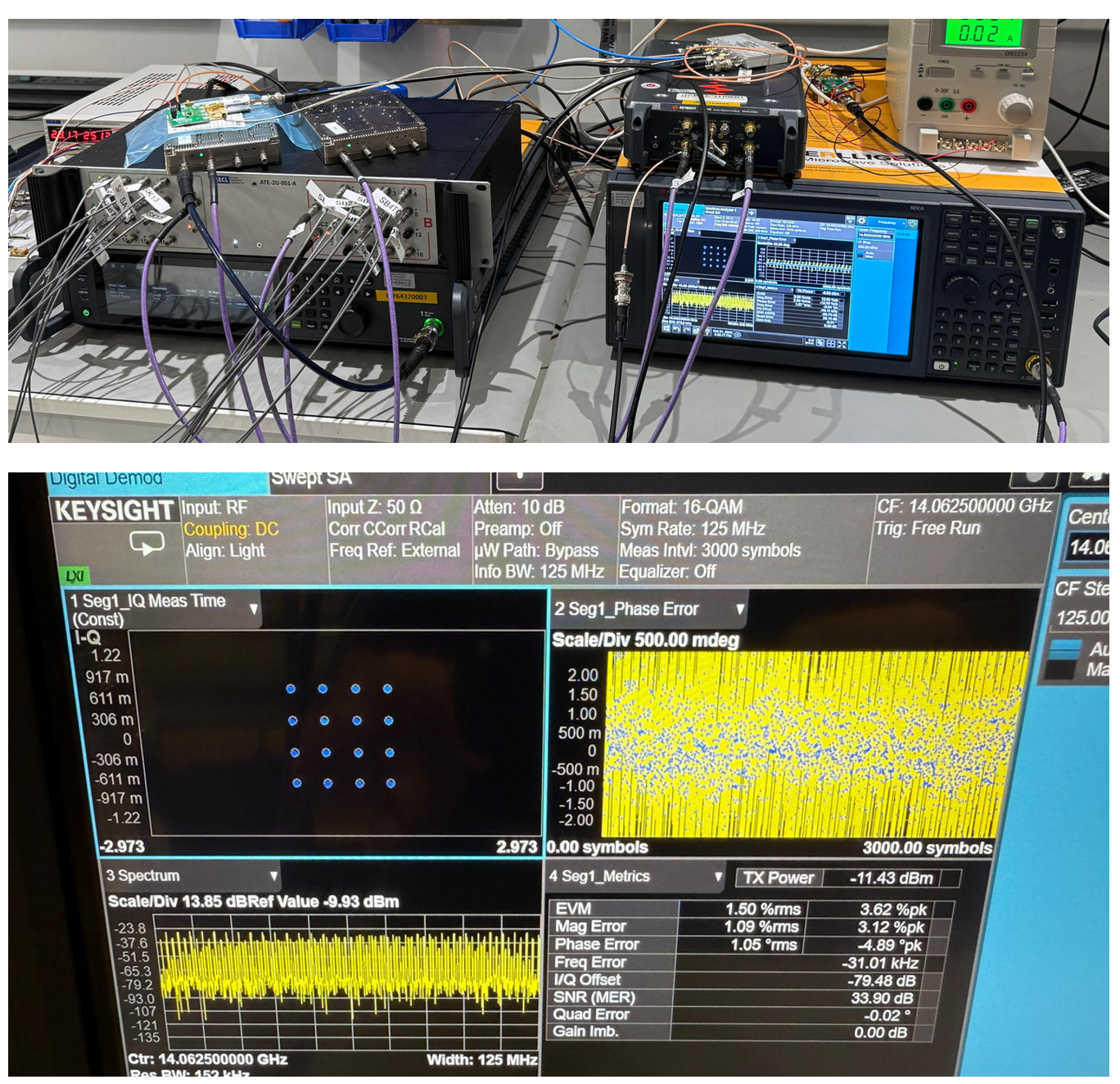
The block diagram below illustrates a system configured to perform direct VNA measurements on a payload with up to 32 RF ports. In this configuration, a cost-effective signal generator producing a modulated waveform is upconverted to Ka-band (for example) and subsequently downconverted for EVM analysis using a similarly cost-effective receiver.
By combining frequency conversion and intelligent switching within the test architecture, a wide range of measurements can be performed on a high port-count DUT using a single primary test instrument. These measurements include Gain, Return Loss, Group Delay, Spurious Monitoring, EVM, and digital modulation analysis.
The result is a highly efficient and scalable test solution that significantly reduces equipment cost and system complexity without compromising measurement capability.