European Engineering Consultancy Ltd (EECL), a UK-based RF, microwave and satellite engineering company, has made a significant investment to upgrade its production, test and cleanroom capabilities to better serve its client base. The enhanced facility also allows EECL to provide on-demand laboratory access for RF and microwave engineers working across aerospace, defence and other advanced RF systems for harsh-environment applications.
The refurbished space has been built from the ground up to support development, rework, inspection and environmental validation of an array of RF hardware, including in-orbit payloads operating across all microwave and mmWave frequencies, including V-band. It also establishes a lab-as-a-service model, giving engineers and organisations developing precision RF hardware access to high-specification test and measurement tools without the need for significant capital investment. The facility is particularly suited to space and satellite programmes where production volumes are low, but performance requirements are highly demanding.
The lab and cleanroom include the following advanced test and measurement equipment:
This strategic investment comes at a pivotal time, as EECL continues to support next-generation space programmes. Recent success stories include the HydroGNSS climate mission and the Luna Orbit navigation programme, underscoring the accelerated demand for high-frequency RF capability across the aerospace industry.
“Access to advanced RF test and rework facilities has always been a challenge, particularly for smaller organisations, where the cost of test and validation to ECSS standards, can be prohibitive,” explained Ben Kieniewicz, Founder and CEO of EECL. “By making our labs space available on demand, we’re removing this barrier to entry, giving RF engineers access enterprise-grade facilities without the Capex investment.”
EECL is one of the few RF companies in the UK with proven experience in V-band, a key frequency range for next-generation space and satellite communications. Supporting applications such as high-throughput data links and inter-satellite communications, V-band supports significantly higher data rates and performance, with system implementation requiring precise control of signal integrity, tolerances and manufacturing processes, areas where EECL’s engineering team excels.
EECL has also recently achieved ISO 9001 accreditation, underpinning its quality management processes and enabling its involvement in high-reliability space and communications programmes. With this accreditation and recent investment, the company is positioning itself to support a wider range of customers across the space, satellite and advanced electronics sectors, where access to compliant test environments and specialist RF expertise is critical to programme success.
European Engineering Consultancy Ltd (EECL), a precision engineering specialist in bespoke RF and microwave subsystems for space and industry, is marking a technical milestone with the successful operation of its ultra-low-noise amplifiers on the ESA HydroGNSS climate mission, now operating in Low Earth Orbit following its launch from Vandenberg Space Force Base, California, in November 2025. The achievement comes three years after the company signed its initial contract with Surrey Satellite Technology Ltd (SSTL), which built the satellites and the GNSS receiver for the mission.
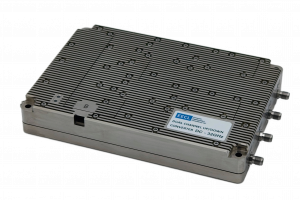
Under the ESA programme, EECL was selected to design and manufacture six multiband ultra-low-noise microwave amplifiers (LNAs) for the twin HydroGNSS Scout satellites. These LNAs form a critical part of the payload’s radio frequency chain, amplifying extremely weak reflected signals while preserving signal integrity, to ensure valuable scientific data is captured at the earliest stage of reception.
For EECL, the strong in-orbit performance marks a major validation of its engineering capability. The LNAs were designed, manufactured and rigorously tested in the UK to meet demanding space qualification standards. Their operational success reinforces the company’s expertise in high-reliability microwave technology for space applications.
The HydroGNSS mission, supported by EECL’s LNAs, is ESA’s first Earth Observation Scout mission to reach orbit. The twin satellites use a pioneering GNSS reflectometry technique to capture and analyse faint signals from Global Navigation Satellites, including GPS and Galileo, after they reflect from land, ocean and ice on the Earth’s surface. These measurements enable scientists to monitor key hydrological and climate variables such as soil moisture, freeze–thaw state over permafrost, inundation and wetlands, as well as above-ground biomass. The captured data is crucial to understanding and responding to climate change.
Early in-orbit results have confirmed that the spacecraft payloads are performing as designed, with both satellites successfully collecting Delay Doppler Maps of reflected GNSS signals. Commissioning has progressed smoothly, with subsystems brought online and payload data acquisition initiated on schedule, validating hardware functionality and demonstrating strong signal acquisition capability.
“HydroGNSS is a mission with real global significance,” explains Ben Kieniewicz, CEO of EECL. “The signals being measured are incredibly faint, so low-noise amplifier performance is fundamental to mission success. Seeing our hardware performing accurately in orbit and enabling the collection of meaningful climate data is something the whole EECL team is extremely proud of.”
Since the original agreement between EECL and SSTL was signed in 2022, HydroGNSS has begun delivering meaningful climate data from orbit, demonstrating how high-performance RF technology underpins modern Earth observation systems. EECL’s involvement in the mission reflects its continued commitment to supporting space programmes that address global environmental challenges, while reinforcing its position as a trusted supplier of reliable, ultra-low-noise microwave solutions for demanding earth observation and SatCom applications.
EECL invests in RF production, test and cleanroom facilities to include on-demand lab hire
April 2026
EECL Ultra-Low-Noise Amplifiers achieve in-orbit technical milestone on ESA HydroGNSS climate mission
March 2026
EECL secures £1.5m contract with European Space Agency for payload qualification and test systems
February 2026
EECLs XBand LNB in Space
EECLs hardware launches on SpaceX and has validated in orbit performance
January 2026
We’re Finalists – Elektra Awards 2025
EECL were finalists in Elektra awards 2025 for design team of the year November 2025
EECL Presents W-Band Frequency Converter at ARMMS RF & Microwave Conference
Our first 90GHz product presented
May 2025
Kingston Borough Business Awards 2025 – Winners!
We won Growing Reputation Award with a distition in Technology Impact April 2025
EECL Delivers Flight Hardware to SSTL for Amazon Monitoring
We delivered 3 flight modules for amazon rainforest monitoring due to launch on Amazonia-1B.
March 2025
ESA HydroGNSS Delivery to SSTL
We delivered 9 payload modules for ESA HydroGNSS mission all designed, built and tested by EECL
January 2024
EECL Delivers 10,000th RF FIP Enclosure
marking a milestone in its production capability
December 2023
EECL Selected to Supply ESA-SSTL LNA Modules
We were selected to design 9 flight modules for SSTL on ESA HydroGNSS
December 2023
First Hardware in Space is performing
Our first hardware was launched on SpaceX – A GPS receiver for SpacePNT
June 2023
EECL Featured on the Front Cover of Electronics Weekly
Our lunar receiver was featured on the front page of Electronics Weekly
May 2022
EECL Hosts Sir Ed Davey
We had the pleasure of hosting our MP Sir Ed Davey who enjoyed a tour of our projects and facilities
April 2022